
What to look for in a modern workshop program in 2026
Digitalization in the automotive industry is accelerating faster than ever. In 2026, it's no longer enough for a workshop program to handle hours, work orders and invoices. A modern workshop program must be the operational engine of the entire workshop.
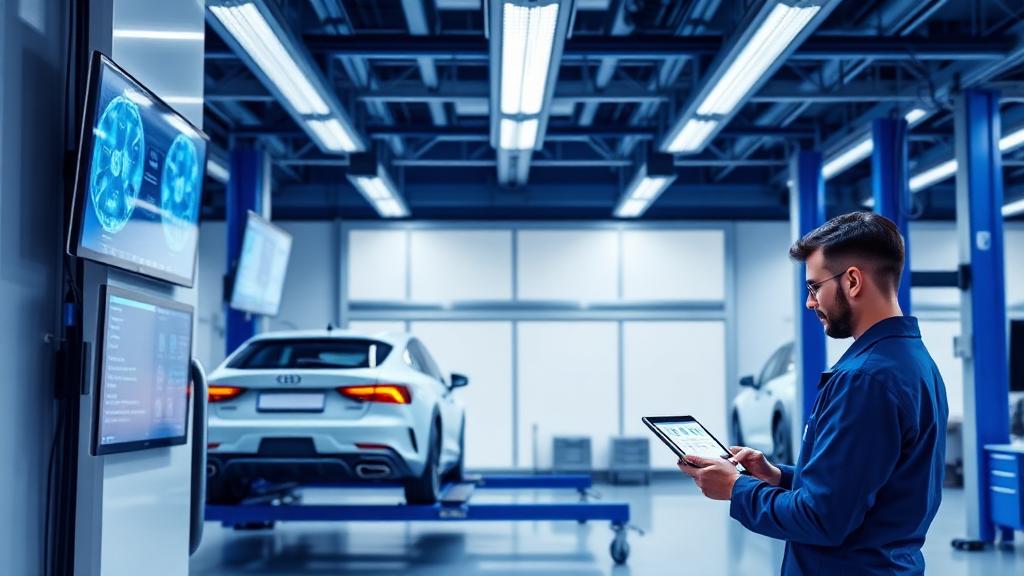
Choosing an IT system is one of the most important decisions a workshop can make. Here are the key things to look for when evaluating whether your current solution is future-proof – or if it's time to rethink.
In 2026, artificial intelligence should not be a buzzword, but an actual co-worker in the workshop. A modern workshop program should use AI to automate routine tasks, predict and recommend based on history, and simplify documentation with speech-to-text and image analysis.
Legacy systems are PC-oriented. In 2026, technicians must be able to work just as efficiently on the shop floor as in the office – with job management, documentation, checklists and real-time parts status directly on their phone.
Customers expect the same level of digital control as when shopping online. Self-service booking, real-time status, digital approval, payment before pickup and 24/7 drop-off/pickup via key boxes dramatically reduce phone pressure.
With stricter requirements for privacy, AI use and data storage, a modern workshop program must support Norwegian/EU-compliant data storage, encrypted communication and integrations with Norwegian systems.
The core of a modern workshop program is that all steps in the process are connected: Booking → Admin → Technician → Parts → Admin → Customer → Payment → Key box. If you have to glue the process together with manual routines, you have an old system.
Key Features
- AI as an active part of the workflow – automation, prediction and documentation
- Full mobility – technicians do everything from their phone
- Complete digital customer journey – self-service from booking to delivery
- Data security and Norwegian regulatory compliance (GDPR)
- Everything is connected – no silos, one unified process
- Automate the manual and eliminate waiting time
- Give technicians everything they need on their phone
- Give customers full overview and self-service
- Give managers real-time control over operations and profitability
- Replace all unnecessary systems with one unified process