
What is a modern DMS in 2026 – and why do yesterday's systems no longer cut it?
For many years, DMS has been the core of car dealers' digital operations. But the automotive industry in 2026 demands something entirely different from systems built 10, 20 and 30 years ago. A classic DMS was made for accounting and invoicing – not for modern flow, customer journeys or workshop production.
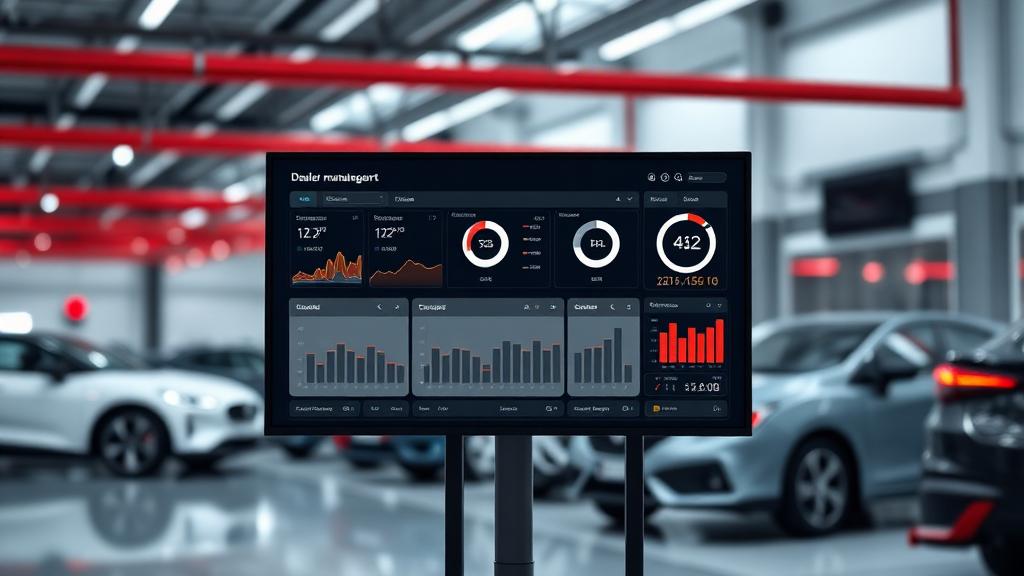
Today, a DMS must be something completely different. It must be the operational platform itself. Historically, DMS was synonymous with orders, invoices, accounting and simple customer management. But today's workshops need real-time flow, automation, customer portals, digital approvals, integrated parts, mobile workstations and 24/7 drop-off/pickup.
Previously, DMS came in when the job was done: documentation, invoice, storage. In 2026, a modern DMS must start the customer journey – from digital booking and automatic order generation to real-time status, approval of additions, payment before pickup and key box integration.
Old systems increase the load on service advisors. Modern solutions remove it. In a modern DMS, the service advisor should not have to create jobs manually, call customers for status or answer phones all day.
Mechanics are no longer PC users. Technicians need work orders on mobile, photos/video directly on the job, checklists, technical documentation, real-time parts status and direct communication with the service advisor – all in one flow. If your DMS requires a PC for everything, it belongs in 2005.
Legacy systems are module-based. Modern DMS solutions are process-based. The difference: old DMS gives you the module and wishes you luck. Modern DMS provides flow from start to finish, automates transitions and drives the process – not the people.
In 2026, a DMS must be connected to accounting, parts and suppliers, payments, vehicle inspection systems, key boxes, diagnostic tools, CRM/customer portals, valuation systems and car sales platforms.
A modern DMS should use AI for automatic work order creation, fault code interpretation, parts and work suggestions, rewriting technical notes, process monitoring, completion time prediction and capacity analysis. AI is not decoration – it's necessary for efficient operations.
In 2026, a DMS must be cloud-based, encrypted, always updated, GDPR-compliant, with Norwegian data storage and accessible from all devices.
Key Features
- DMS as an operational platform – not just an accounting system
- The entire customer journey digitized – from booking to key box
- Reduced service advisor workload through automation
- Mobile-first for technicians – everything on their phone
- Process-based flow – the system drives the process, not people
- Standard integrations with accounting, parts, payments and public systems
- AI integrated throughout the workflow – not an add-on module
- Cloud-based SaaS with Norwegian data storage and GDPR compliance
- Reduces administration and eliminates manual steps
- Delivers a better customer journey and increased satisfaction
- Increases workshop production and efficiency
- Provides real-time management control and insights
- Improves data quality and simplifies operations
- Lets employees focus on value-creating work